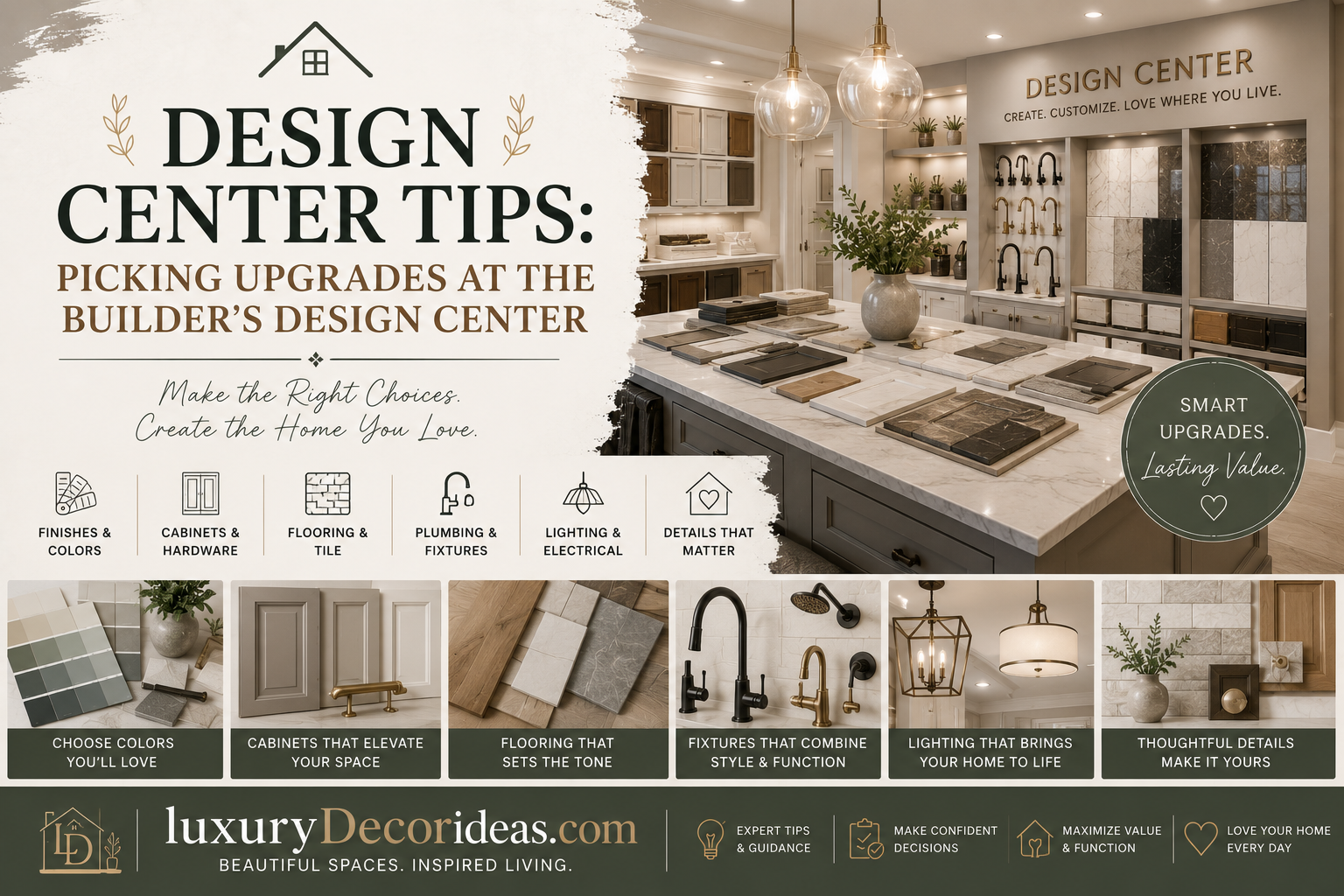
If you have ever walked into a builder’s design center for the first time, you probably remember that mix of excitement and pure overwhelm. Rows of countertop samples, walls of flooring options, cabinet finishes stacked floor to ceiling, and a design consultant walking you through what feels like a thousand decisions, all while a countdown clock on your selection deadline ticks away in the back of your mind.
Choosing upgrades at a builder’s design center is one of the most exciting parts of building a new home, but it is also one of the easiest places to either overspend on upgrades that will not matter long term, or underspend on the ones that actually will. After navigating this process ourselves and talking with plenty of other homeowners who have been through it, we have put together this comprehensive guide to help you walk into your design center appointment feeling prepared, confident, and ready to make smart choices.
Let us break down exactly how to approach this process. 🏡✨
Why the Design Center Experience Can Feel So Overwhelming 🤯
Before diving into specific tips, it helps to understand why this process trips up so many first time buyers.
🌟 Design centers are intentionally set up to showcase upgrades in their best possible light, making nearly everything feel appealing 🌟 Appointments often move quickly, leaving little time for careful deliberation on each individual decision 🌟 Pricing for upgrades is frequently presented without clear context for how that cost compares to doing the same work later 🌟 The sheer number of categories, from flooring to lighting to cabinet hardware, can create genuine decision fatigue 🌟 Many buyers feel pressure to make decisions on the spot rather than taking time to research each option
Understanding these dynamics ahead of time is the first step toward walking into your appointment with a clear head and a solid plan.
Do Your Research Before Your Appointment 🔍
The single most valuable thing you can do before stepping into the design center is arrive with a plan already in place.
📋 Request a list of available upgrade categories and options from your builder ahead of time if possible 💰 Research the general cost of comparable upgrades if completed after closing through a third party contractor 📌 Create a rough priority list of which upgrades matter most to you before you are standing in the showroom 🖼️ Gather inspiration images for your preferred finishes, colors, and styles so you are not making decisions from scratch on the spot 🗓️ Confirm your appointment length ahead of time so you can pace your decision making accordingly
Walking in with even a loose framework already established makes an enormous difference in how confident and clear headed you feel throughout the appointment.
Understand Which Upgrades Are Difficult to Change Later 🔧
One of the most important concepts to grasp before your design center appointment is the difference between structural upgrades and cosmetic upgrades. This distinction should heavily influence where you spend your upgrade budget.
🏗️ Structural and layout upgrades, such as moving walls, adding electrical outlets, upgrading plumbing rough ins, or extending square footage, are extremely difficult and expensive to change after the home is built.
🎨 Cosmetic upgrades, such as light fixtures, cabinet hardware, paint colors, and even flooring in many cases, can typically be updated later by a homeowner or independent contractor for a comparable or sometimes lower cost.
Prioritizing your design center budget toward the structural category first is one of the smartest strategies you can employ throughout this process.
Comparison Table: Prioritize Structural Upgrades First 🧾
| Upgrade Category | Difficulty to Change Later | Recommended Priority |
|---|---|---|
| Electrical Outlet Placement | Very High | High Priority |
| Plumbing Rough Ins | Very High | High Priority |
| Structural Wall Changes | Very High | High Priority |
| Cabinet Layout and Configuration | High | High Priority |
| Flooring Type | Medium | Medium Priority |
| Countertop Material | Medium | Medium Priority |
| Light Fixtures | Low | Lower Priority |
| Cabinet Hardware | Low | Lower Priority |
| Paint Colors | Low | Lower Priority |
| Faucets and Plumbing Fixtures | Low to Medium | Lower to Medium Priority |
Using a framework like this can help guide your spending decisions when you are standing in the showroom trying to make dozens of choices within a limited appointment window.
Prioritize Function Over Trends 🎯
It is easy to get swept up in whatever finish or style happens to be trending during your specific design center visit. But trends fade, while your everyday functional needs remain constant for as long as you live in the home.
🍳 Think through how you actually use your kitchen, bathrooms, and living spaces on a daily basis before choosing upgrades 👨👩👧👦 Consider your household’s specific needs, whether that means durable flooring for pets and kids or additional electrical outlets for a home office setup 📐 Choose layout related upgrades based on genuine functionality rather than simply what looks impressive in the showroom display 🕰️ Ask yourself whether a particular trendy finish will still feel appealing in ten or fifteen years, or whether it is likely to feel dated relatively quickly
Function focused decisions tend to age far better than purely trend driven ones, both aesthetically and financially.
Know Where Builder Upgrade Pricing Tends to Be Reasonable 💵
While builder upgrade pricing often carries a reputation for being marked up compared to third party contractor pricing, this is not universally true across every category. Certain upgrades genuinely make more financial sense to select directly through the builder.
✅ Structural changes, since these are far more disruptive and costly to complete after the home is finished ✅ Items directly tied to the home’s structural systems, like upgraded insulation or window packages ✅ Certain electrical and plumbing rough in work that would require significant demolition to add later
On the other hand, many cosmetic and finish level upgrades are frequently available at a lower cost through independent suppliers or contractors after closing.
Where You Might Save Money by Waiting 🕰️
Understanding where to hold off on builder upgrades can help stretch your overall renovation and personalization budget significantly further.
🚪 Interior door hardware and cabinet pulls are often widely available at lower cost through independent retailers 💡 Light fixtures can frequently be swapped out after closing for a fraction of the builder’s upgrade price 🎨 Paint colors are one of the easiest and most affordable upgrades to change yourself after move in 🪟 Window treatments are almost always more cost effective and customizable when sourced independently 🚰 Certain faucet and fixture upgrades may be available at better pricing through local suppliers or online retailers
Being strategic about which categories to decline at the design center, in favor of handling them independently later, can meaningfully reduce your overall upgrade spending.
Comparison Table: Builder Versus Later Upgrade Strategy 🧾
| Category | Better to Choose at Builder | Better to Handle Later |
|---|---|---|
| Structural Layout Changes | Yes | No |
| Electrical Outlet Placement | Yes | No |
| Plumbing Rough Ins | Yes | No |
| Cabinet Configuration | Yes | No |
| Flooring | Often | Sometimes |
| Countertops | Often | Sometimes |
| Light Fixtures | Rarely | Often |
| Cabinet Hardware | Rarely | Often |
| Paint Colors | Rarely | Almost Always |
| Window Treatments | Rarely | Almost Always |
Set a Realistic Upgrade Budget Before You Arrive 💰
One of the easiest ways to end up significantly over budget after a design center appointment is walking in without a clear spending limit already established.
📊 Determine your total upgrade budget before your appointment, separate from your base home price 🎯 Break that budget down into rough categories, such as flooring, kitchen, bathrooms, and electrical, before you arrive 🛑 Set a personal rule for yourself regarding how to handle upgrades that exceed your predetermined budget in the moment 💳 Understand how upgrade costs will be financed, whether rolled into your mortgage or paid separately, since this significantly affects long term cost
Having these numbers clearly defined ahead of time helps prevent emotional, in the moment overspending once you are surrounded by beautiful display samples.
Ask Detailed Questions About Each Upgrade 🙋
Design consultants handle these appointments constantly, and while most are genuinely helpful, it remains your responsibility to ask the right questions before committing to any specific upgrade.
❓ Ask exactly what is included within a given upgrade package, since bundled pricing can sometimes obscure individual item costs ❓ Confirm whether a particular upgrade affects your home’s resale value or is primarily a personal preference choice ❓ Ask about the specific brand and model of any included fixtures or appliances, so you can research them independently later ❓ Clarify the timeline for when selections must be finalized versus when changes are still possible ❓ Ask whether certain upgrades are structural in nature or purely cosmetic, to help inform your prioritization strategy
Do not hesitate to ask these questions even if it slows down the appointment slightly. This is a significant financial decision, and thorough understanding matters more than moving quickly through the process.
Bring a Second Opinion If Possible 👥
Design center appointments can move quickly, and having a second set of eyes and ears in the room can make a meaningful difference in your final decisions.
👫 A partner, family member, or trusted friend can help you evaluate options more objectively 📝 A second person can take notes while you focus on evaluating physical samples and finishes 💭 Having someone else present often helps slow down impulsive, in the moment decision making 🎨 A second opinion can be particularly valuable for design related choices where personal taste varies significantly between individuals
If bringing someone along is not possible, consider recording detailed notes or photos throughout your appointment so you can review your choices with someone later before final confirmation.
Common Mistakes to Avoid at the Design Center ⚠️
Even well prepared buyers can fall into a few common traps during this process. Keep these in mind as you move through your own appointment.
❌ Overspending on purely cosmetic upgrades that could be completed later for less money ❌ Underinvesting in structural or layout related upgrades that will be difficult and costly to change after move in ❌ Making impulsive decisions based on showroom lighting and presentation rather than how a finish will actually look in your home ❌ Failing to ask enough questions about what is included within bundled upgrade packages ❌ Not setting a clear budget before the appointment, leading to emotional overspending in the moment
Avoiding these common pitfalls can save you significant stress and financial regret once your home is complete.
Tips for Staying Calm and Confident During Your Appointment 🧘
The design center process does not need to feel stressful if you approach it with the right mindset and preparation.
🕰️ Arrive early to review any materials or samples before your official appointment time begins 📝 Bring your prioritized list and budget breakdown as physical reference points throughout the appointment 🛑 Give yourself permission to say no to upgrades that were not part of your original plan, even if they look appealing in the moment 💬 Remember that you can always ask for a brief pause to think through a decision rather than feeling pressured to decide immediately 🎯 Focus on your predetermined priorities rather than getting distracted by every available option
Staying grounded in your preparation throughout the appointment helps ensure your final selections genuinely reflect your needs and preferences, rather than in the moment showroom excitement.
What to Do After Your Design Center Appointment 📋
Once your appointment concludes, a few follow up steps can help ensure everything proceeds smoothly from here.
📄 Request a detailed, itemized summary of all selections and associated costs for your records 🔍 Review your selections carefully within any allowed change period before your choices become final 💾 Save all documentation, including model numbers and finish names, for future reference or potential warranty needs 📅 Confirm the finalized timeline for your remaining build process based on your completed selections
Keeping thorough records throughout this process will prove valuable not only during construction but also for any future maintenance, repairs, or resale conversations.
Frequently Asked Questions ❓
Are builder design center upgrades always more expensive than doing them independently later? Not always. Structural and layout related upgrades are often more cost effective through the builder, while cosmetic finishes are frequently available at a lower cost through independent sources after closing.
How much time should I expect my design center appointment to take? This varies significantly by builder and the scope of your home, but appointments often range from a couple of hours to a full day, particularly for larger custom builds.
Can I make changes after my design center selections are finalized? This depends entirely on your specific builder’s policies and where you are in the construction timeline, so it is important to clarify change deadlines directly during your appointment.
Should I bring my own inspiration photos to the appointment? Yes, bringing reference images can help you communicate your preferences more clearly and can speed up decision making throughout the appointment.
Is it worth hiring an independent designer to help with design center selections? For larger or more complex custom builds, some homeowners find real value in bringing an independent designer along, particularly for coordinating a cohesive overall aesthetic across multiple selection categories.
Final Thoughts 💭
Navigating a builder’s design center does not have to feel like an overwhelming whirlwind of decisions made under pressure. With thorough preparation, a clear budget, a solid understanding of which upgrades matter most long term, and the confidence to ask detailed questions, you can walk away from this experience with selections that genuinely reflect your needs, style, and financial priorities.
Remember that this process is ultimately about building a home that will serve you well for years to come, not simply checking boxes on an upgrade sheet. Take your time, trust your preparation, and give yourself grace throughout what is undeniably one of the more exciting yet demanding parts of the home building journey. 🏡🎨