
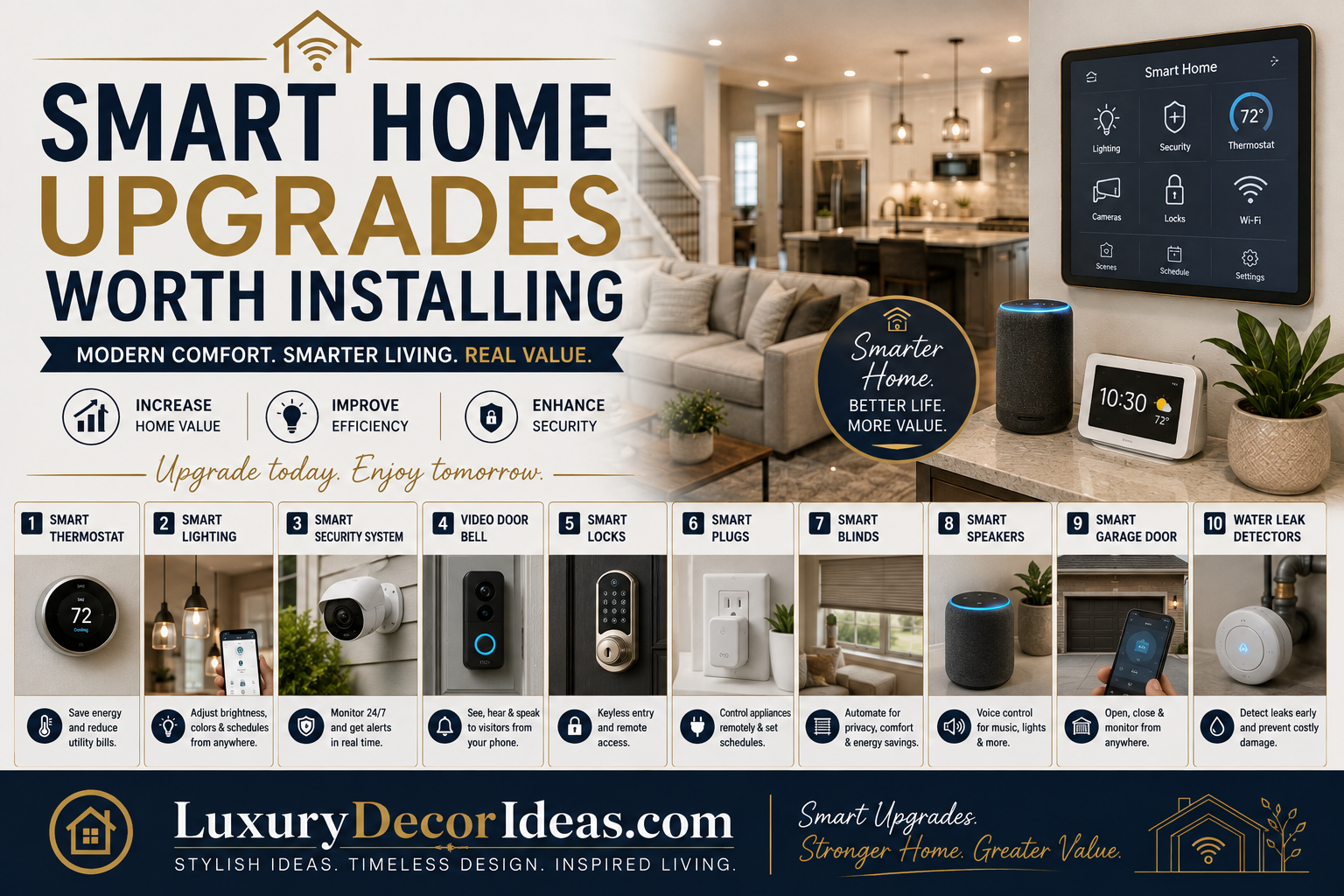
The smart home market has genuinely exploded in recent years, and with that growth comes an overwhelming number of gadgets promising to make your life easier, safer, or more efficient. Not all of them deliver on that promise equally. Some smart devices genuinely transform your daily routine and pay for themselves through real savings, while others end up as expensive novelties gathering dust in a drawer.
We have pulled together a focused, value ranked look at the smart home upgrades that consistently prove genuinely worth installing, based on real everyday usefulness, measurable savings, and lasting appeal rather than just impressive sounding features. Let us separate the genuinely worthwhile upgrades from the passing novelties. Let us dive in. 🔌✨
How We Are Ranking Value in This Guide 🤔
Before diving into specific devices, let us clarify what genuinely qualifies as worth installing throughout this guide.
🌟 Daily usefulness. Does this device genuinely get used regularly, or does the novelty wear off within a few weeks?
🌟 Measurable savings or protection. Does it reduce your bills or protect your home from a genuine risk like water damage or break ins?
🌟 Ease of use. Does it integrate smoothly into daily life, or does it require constant troubleshooting and frustration?
🌟 Reasonable cost relative to benefit. Does the investment make sense compared to the actual value delivered?
With this framework in mind, let us explore the specific smart home upgrades that consistently earn their place.
Tier One: Genuinely Worth Installing for Nearly Everyone 🥇
These upgrades offer such strong, consistent value that we would recommend them for the vast majority of households.
🌡️ Smart thermostat. This device genuinely earns its reputation as the gold standard smart home upgrade, offering measurable energy savings through learned scheduling and remote temperature control.
🔒 Smart smoke and carbon monoxide detectors. These send mobile alerts even when you are away from home, offering genuine safety value beyond a standard detector.
💧 Smart water leak detectors. Placed near water heaters, washing machines, and under sinks, these catch leaks early, potentially preventing thousands of dollars in water damage.
🔔 Video doorbell. Genuinely useful for package monitoring, visitor screening, and basic security, with daily practical value that most households actually use.
Comparison Table: Tier One Upgrade Overview 🧾
| Device | Primary Value | Approximate Payback |
|---|---|---|
| Smart Thermostat | Energy savings | 1 to 2 years |
| Smoke and CO Detectors | Safety | Immediate, ongoing |
| Water Leak Detectors | Damage prevention | Immediate upon first catch |
| Video Doorbell | Security and convenience | Immediate, ongoing |
Tier Two: Strong Value for Most Households 🥈
These upgrades deliver genuine, consistent value, though they may matter more for some households than others depending on specific needs.
🔒 Smart locks. Offer genuine convenience for households with kids, frequent guests, or anyone who has ever been locked out.
💡 Smart plugs. An affordable, flexible entry point that adds smart control to lamps and existing devices without replacing anything.
📹 Outdoor security cameras. Provide genuine peace of mind and documentation in the event of package theft or property concerns.
🌬️ Smart humidity and air quality monitors. Particularly valuable for households with allergies, asthma, or specific climate concerns.
Comparison Table: Tier Two Upgrade Overview 🧾
| Device | Best For | Approximate Cost Level |
|---|---|---|
| Smart Locks | Families, frequent guests | Low to Moderate |
| Smart Plugs | Flexible, affordable automation | Very Low |
| Outdoor Cameras | Package and property monitoring | Moderate |
| Air Quality Monitors | Allergy or asthma sensitive households | Low to Moderate |
Tier Three: Genuinely Nice, But More Situational 🥉
These upgrades offer real value for specific households or use cases, though they are less universally essential than the previous tiers.
💡 Smart light switches. Offer whole room lighting control, though smart bulbs can achieve similar results for less initial investment.
🌿 Smart sprinkler controllers. Genuinely valuable for homeowners with lawns or gardens, offering water savings through weather based scheduling.
🚗 Smart garage door controllers. Useful for households who frequently wonder whether they left the garage open.
🔌 Whole home smart power monitoring. Offers detailed insight into energy usage by device, though this level of detail is more valuable for genuinely curious or efficiency focused homeowners.
Comparison Table: Tier Three Upgrade Overview 🧾
| Device | Best For | Value Type |
|---|---|---|
| Smart Light Switches | Whole room control | Convenience |
| Smart Sprinkler Controllers | Homeowners with lawns or gardens | Water savings |
| Smart Garage Controllers | Frequent forgetfulness about garage status | Peace of mind |
| Power Monitoring Systems | Efficiency focused households | Detailed insight |
Devices That Often Do Not Deliver Proportional Value ⚠️
Just as certain smart devices genuinely earn their place, others consistently underdeliver relative to their cost and hype.
❌ Smart refrigerators with elaborate touchscreen displays, where the smart features are rarely used beyond the first few weeks ❌ Overly niche single purpose gadgets, like smart egg trays or smart hairbrushes, that solve problems most households do not actually have ❌ Fully integrated whole home audio systems for households that primarily use a single portable speaker anyway ❌ Elaborate smart mirrors with extensive features that go largely unused beyond basic lighting adjustment
Full Summary Table of Smart Home Upgrades by Tier 📋
| Tier | Devices Included |
|---|---|
| Tier One, Genuinely Essential | Thermostat, smoke and CO detectors, leak detectors, video doorbell |
| Tier Two, Strong Value | Smart locks, smart plugs, outdoor cameras, air quality monitors |
| Tier Three, Situational | Light switches, sprinkler controllers, garage controllers, power monitoring |
| Skip Unless Genuinely Needed | Elaborate refrigerators, niche single purpose gadgets, unused whole home audio |
Calculating Real Payback for Energy Focused Devices 🔋
For devices marketed around energy savings, understanding realistic payback timelines helps set accurate expectations.
🌡️ A smart thermostat typically saves a meaningful percentage on heating and cooling costs annually, often paying for itself within one to two years depending on your climate and current habits 💧 Smart sprinkler controllers can reduce outdoor water usage noticeably, though actual savings depend heavily on your local climate and existing irrigation habits 🔌 Smart plugs offer modest energy savings primarily by eliminating phantom power draw from devices left plugged in unnecessarily
Comparison Table: Energy Focused Device Payback 🧾
| Device | Savings Type | Realistic Payback Timeline |
|---|---|---|
| Smart Thermostat | Heating and cooling costs | 1 to 2 years |
| Smart Sprinkler Controller | Outdoor water usage | 1 to 3 years |
| Smart Plugs | Phantom power elimination | 2 to 4 years |
How to Prioritize Your Own Smart Home Budget 🎯
With a wide range of genuinely worthwhile options available, a few strategic questions help guide your specific priorities.
🏠 What genuine daily frustration are you trying to solve? Start with devices addressing real pain points rather than simply impressive sounding features.
💰 What is your realistic budget? Tier one devices generally offer the strongest value per dollar, making them a smart starting point regardless of overall budget size.
🔧 Do you already have compatible smart home infrastructure? Choosing devices within your existing ecosystem genuinely improves ease of use and reliability.
📊 Will you actually use this device regularly? Be honest about your own habits, since even a genuinely useful device delivers no value if it goes unused.
Common Mistakes When Choosing Smart Home Upgrades ⚠️
Even well intentioned smart home shoppers can fall into a few common traps.
❌ Purchasing devices based on impressive marketing rather than genuine daily usefulness ❌ Choosing incompatible devices across multiple ecosystems, leading to a frustrating, disconnected experience ❌ Overspending on niche gadgets before addressing genuinely essential upgrades like a thermostat or leak detectors ❌ Underestimating the ongoing subscription costs some smart devices require for full functionality ❌ Failing to research realistic energy savings claims, which can be exaggerated in marketing materials
Frequently Asked Questions ❓
What is the single best smart home device to start with? A smart thermostat consistently ranks among the most universally valuable smart home upgrades, offering genuine, measurable energy savings alongside daily convenience.
Are smart locks actually more secure than traditional deadbolts? When properly installed and maintained, smart locks can offer comparable or improved security, along with the added convenience of remote access and activity monitoring.
Do smart home devices require an ongoing subscription? This varies by device and brand. Some devices, particularly certain security cameras and monitoring systems, may require a subscription for full cloud storage or advanced features, so always check before purchasing.
Is it worth replacing all our light switches with smart versions? For many households, smart bulbs offer similar convenience at a lower initial cost compared to replacing every switch, making this a worthwhile alternative to consider.
How do we avoid buying smart devices we will not actually use? Focus on devices that address genuine daily frustrations or safety concerns rather than purchasing based on impressive features alone, and start with the most universally valuable tier one devices first.
Final Thoughts 💭
Not every smart home gadget lives up to its marketing promises, but a genuine handful of devices consistently deliver real, measurable value through savings, safety, and daily convenience. From smart thermostats and water leak detectors to video doorbells and smart locks, these upgrades earn their place through actual everyday usefulness rather than simply impressive features.
Start with the tier one devices that offer the strongest universal value, expand thoughtfully based on your household’s genuine needs, and trust that a smart home built around real usefulness will serve you far better than one built around novelty. Here is to a home that genuinely works smarter, not just flashier. 📱🏡