
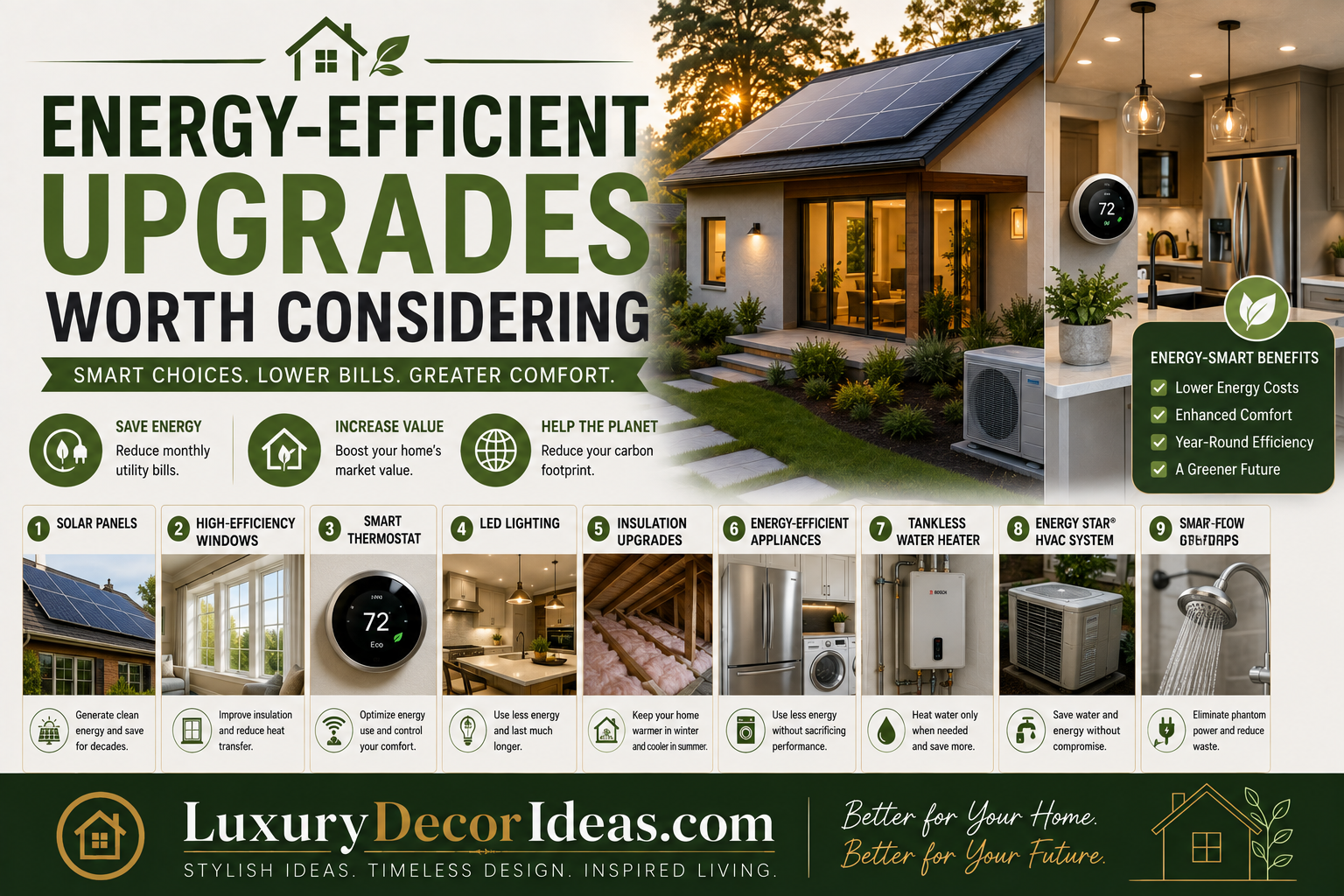
Energy bills have a way of creeping upward year after year, and for many homeowners, the idea of tackling energy efficiency feels overwhelming, expensive, or simply low priority compared to more visually exciting home projects. But the truth is that a handful of targeted energy efficient upgrades can genuinely reduce your monthly costs, improve everyday comfort, and pay for themselves over time in a way few other home investments can match.
We have pulled together a focused, practical look at the energy efficient upgrades genuinely worth considering, based on real payback timelines, everyday comfort improvement, and long term value. Let us break down exactly where your energy efficiency dollars work hardest. Let us dive in. 💡✨
Why Energy Efficiency Deserves Genuine Consideration 🤔
Before diving into specific upgrades, let us talk about why this category deserves more attention than it typically receives.
🌟 Energy costs continue rising in most regions, making efficiency upgrades increasingly valuable over time 🌟 Many efficiency upgrades offer measurable, calculable payback rather than vague, subjective value 🌟 Improved efficiency often comes paired with genuine comfort improvements, like more consistent indoor temperatures 🌟 These upgrades increasingly matter to buyers, adding resale appeal alongside personal savings 🌟 Some upgrades qualify for local or federal incentives, further improving their overall value proposition
With that context established, let us explore the specific upgrades worth genuine consideration.
Insulation Upgrades 🧥
Few upgrades offer as strong a combination of affordability and measurable payback as improved insulation.
🏠 Attic insulation. Often one of the most cost effective efficiency upgrades available, since heat naturally rises and escapes through poorly insulated attic spaces.
🧱 Wall insulation. More involved to install in an existing home, but genuinely valuable for older homes with minimal existing insulation.
🚪 Weatherstripping around doors and windows. An extremely affordable upgrade that prevents drafts and noticeable heat loss around these common problem areas.
Comparison Table: Insulation Upgrade Overview 🧾
| Upgrade | Cost Level | Typical Payback Timeline |
|---|---|---|
| Attic Insulation | Low to Moderate | 2 to 4 years |
| Wall Insulation | Moderate to High | 5 to 10 years |
| Weatherstripping | Very Low | Under 1 year |
Window and Door Upgrades 🪟
Windows and doors represent significant surface area where conditioned air can escape, making these upgrades genuinely worthwhile despite their higher upfront cost.
🪟 Energy efficient replacement windows. Reduce heat transfer significantly compared to older, single pane options, improving both efficiency and comfort.
🚪 Insulated exterior doors. Prevent drafts and heat loss at a genuinely high traffic point in your home’s building envelope.
☀️ Low emissivity window film. A more affordable alternative for homeowners not ready to replace windows entirely, still offering meaningful heat control benefits.
Comparison Table: Window and Door Upgrade Overview 🧾
| Upgrade | Cost Level | Typical Payback Timeline |
|---|---|---|
| Replacement Windows | High | 10 to 20 years |
| Insulated Exterior Doors | Moderate | 5 to 10 years |
| Low Emissivity Window Film | Low | 2 to 4 years |
HVAC System Upgrades 🌡️
Your heating and cooling system represents one of the largest ongoing energy expenses in most households, making thoughtful upgrades here particularly impactful.
🌬️ A high efficiency HVAC system. Modern systems offer significantly improved efficiency ratings compared to older units, translating into meaningful ongoing savings.
🔧 Regular HVAC maintenance and duct sealing. Often overlooked, but genuinely important, since leaky ductwork can waste a significant percentage of conditioned air before it even reaches your living spaces.
🌡️ A smart thermostat. Offers immediate, measurable savings through learned scheduling and more precise temperature control.
Comparison Table: HVAC Upgrade Overview 🧾
| Upgrade | Cost Level | Typical Payback Timeline |
|---|---|---|
| High Efficiency HVAC System | High | 7 to 12 years |
| Duct Sealing and Maintenance | Low | Under 2 years |
| Smart Thermostat | Very Low | 1 to 2 years |
Water Heating Upgrades 💧
Water heating represents a significant, often overlooked portion of most households’ overall energy usage.
🔥 A tankless water heater. Heats water on demand rather than continuously maintaining a full tank, offering genuine efficiency gains for many households.
🧴 Water heater insulation blankets. An extremely affordable upgrade for existing tank style water heaters, reducing standby heat loss.
🚿 Low flow showerheads and faucet aerators. Reduce hot water usage without a noticeable difference in daily function.
Comparison Table: Water Heating Upgrade Overview 🧾
| Upgrade | Cost Level | Typical Payback Timeline |
|---|---|---|
| Tankless Water Heater | Moderate to High | 5 to 10 years |
| Water Heater Insulation Blanket | Very Low | Under 1 year |
| Low Flow Fixtures | Very Low | Under 1 year |
Lighting Upgrades 💡
Lighting upgrades offer some of the most immediately accessible energy savings available to nearly any homeowner.
💡 LED light bulbs. A simple, extremely affordable swap that uses significantly less energy and lasts considerably longer than traditional incandescent bulbs.
🌙 Motion sensor and timer switches. Prevent lights from running unnecessarily in less frequently used spaces.
☀️ Maximizing natural light. While not a purchased upgrade, strategic use of window treatments to maximize daytime natural light reduces reliance on artificial lighting.
Comparison Table: Lighting Upgrade Overview 🧾
| Upgrade | Cost Level | Typical Payback Timeline |
|---|---|---|
| LED Bulb Replacement | Very Low | Under 1 year |
| Motion Sensor Switches | Low | 1 to 2 years |
| Natural Light Maximization | None | Immediate |
Appliance Upgrades 🔌
While not always the first consideration, energy efficient appliances offer meaningful long term savings, particularly for frequently used items.
🧺 An energy efficient washing machine. Uses significantly less water and energy per load compared to older models.
❄️ An energy efficient refrigerator. Since this appliance runs continuously, efficiency improvements here compound meaningfully over time.
🍽️ An energy efficient dishwasher. Modern models use considerably less water while still delivering strong cleaning performance.
Comparison Table: Appliance Upgrade Overview 🧾
| Upgrade | Cost Level | Typical Payback Timeline |
|---|---|---|
| Efficient Washing Machine | Moderate | 5 to 8 years |
| Efficient Refrigerator | Moderate | 5 to 10 years |
| Efficient Dishwasher | Low to Moderate | 4 to 7 years |
Renewable Energy Upgrades ☀️
For homeowners with a longer term outlook, renewable energy options represent a larger investment with potentially significant long term payback.
☀️ Solar panels. A significant upfront investment, though many homeowners see substantial reductions in their monthly electricity bills, with payback timelines varying significantly by region and available incentives.
🔋 Solar battery storage. Pairs with solar panels to store excess energy for use during non sunny hours or power outages.
Comparison Table: Renewable Energy Overview 🧾
| Upgrade | Cost Level | Typical Payback Timeline |
|---|---|---|
| Solar Panels | Very High | 8 to 15 years |
| Solar Battery Storage | High | Varies significantly by usage |
Full Summary Table of Energy Efficient Upgrades by Payback Speed 📋
| Payback Speed | Upgrades Included |
|---|---|
| Under 1 Year | Weatherstripping, water heater blanket, low flow fixtures, LED bulbs |
| 1 to 4 Years | Attic insulation, low emissivity film, smart thermostat, duct sealing |
| 5 to 10 Years | Wall insulation, insulated doors, tankless water heater, efficient appliances |
| 10 or More Years | Replacement windows, high efficiency HVAC, solar panels |
How to Prioritize Based on Your Timeline and Budget 🎯
With so many genuinely worthwhile options available, a few strategic questions help guide your specific priorities.
⏳ How long do you plan to stay in this home? Longer term homeowners can justify upgrades with longer payback periods, like windows or solar panels, more easily than those planning to sell soon.
💰 What is your realistic available budget? Starting with the lowest cost, fastest payback upgrades, like weatherstripping and LED bulbs, allows you to see immediate results before tackling larger investments.
🌡️ What does your current energy usage data show? Reviewing your utility bills can help identify which specific areas, like heating, cooling, or water heating, represent your biggest opportunity for savings.
📋 Are there local or federal incentives available? Many energy efficient upgrades qualify for rebates or tax credits, meaningfully improving their overall payback timeline.
Common Mistakes When Approaching Energy Efficiency ⚠️
Even well intentioned homeowners can occasionally misallocate their energy efficiency budget.
❌ Jumping straight to large investments like solar panels or window replacement before addressing more affordable, faster payback options like insulation and weatherstripping ❌ Overlooking maintenance based improvements, like duct sealing, which can be surprisingly impactful for a relatively low cost ❌ Failing to research available incentives or rebates that could meaningfully improve an upgrade’s overall value ❌ Choosing the cheapest available option without considering long term durability and actual efficiency ratings
Frequently Asked Questions ❓
What is the single best energy efficient upgrade to start with? Attic insulation and basic weatherstripping consistently rank among the most cost effective starting points, offering meaningful savings for a genuinely modest investment.
Are energy efficient appliances really worth the higher upfront cost? For frequently used appliances like refrigerators and washing machines, many homeowners find the accumulated energy and water savings over the appliance’s lifespan genuinely justify the higher initial price.
How long does it typically take for solar panels to pay for themselves? This varies significantly based on your region, local energy costs, and available incentives, though many homeowners see payback within eight to fifteen years, with continued savings afterward.
Is a smart thermostat really worth installing? Yes, for most households. This relatively low cost upgrade consistently delivers measurable energy savings alongside genuine daily convenience.
Should we prioritize insulation or window replacement first? Insulation upgrades generally offer a faster, more affordable payback timeline compared to full window replacement, making it a smart starting point before considering the larger window investment.
Final Thoughts 💭
Energy efficient upgrades offer a genuinely rare combination in home improvement, measurable financial payback alongside real, everyday comfort improvement. From affordable starting points like insulation and weatherstripping to larger investments like high efficiency HVAC systems and solar panels, these upgrades consistently prove worth considering for homeowners at nearly any budget level.
Start with the lowest cost, fastest payback options, research available incentives in your area, and gradually work toward larger investments as your budget and timeline allow. Here is to a home that keeps you comfortable while genuinely keeping more money in your pocket. ⚡🏡