Standing in a builder’s design center with a stack of options in front of you is a genuinely overwhelming experience. Every single upgrade sounds appealing in the moment, the consultant is walking you through beautiful samples, and it becomes incredibly easy to either overspend on things that will not matter in five years or skip past upgrades you will genuinely regret not choosing once your home is finished.
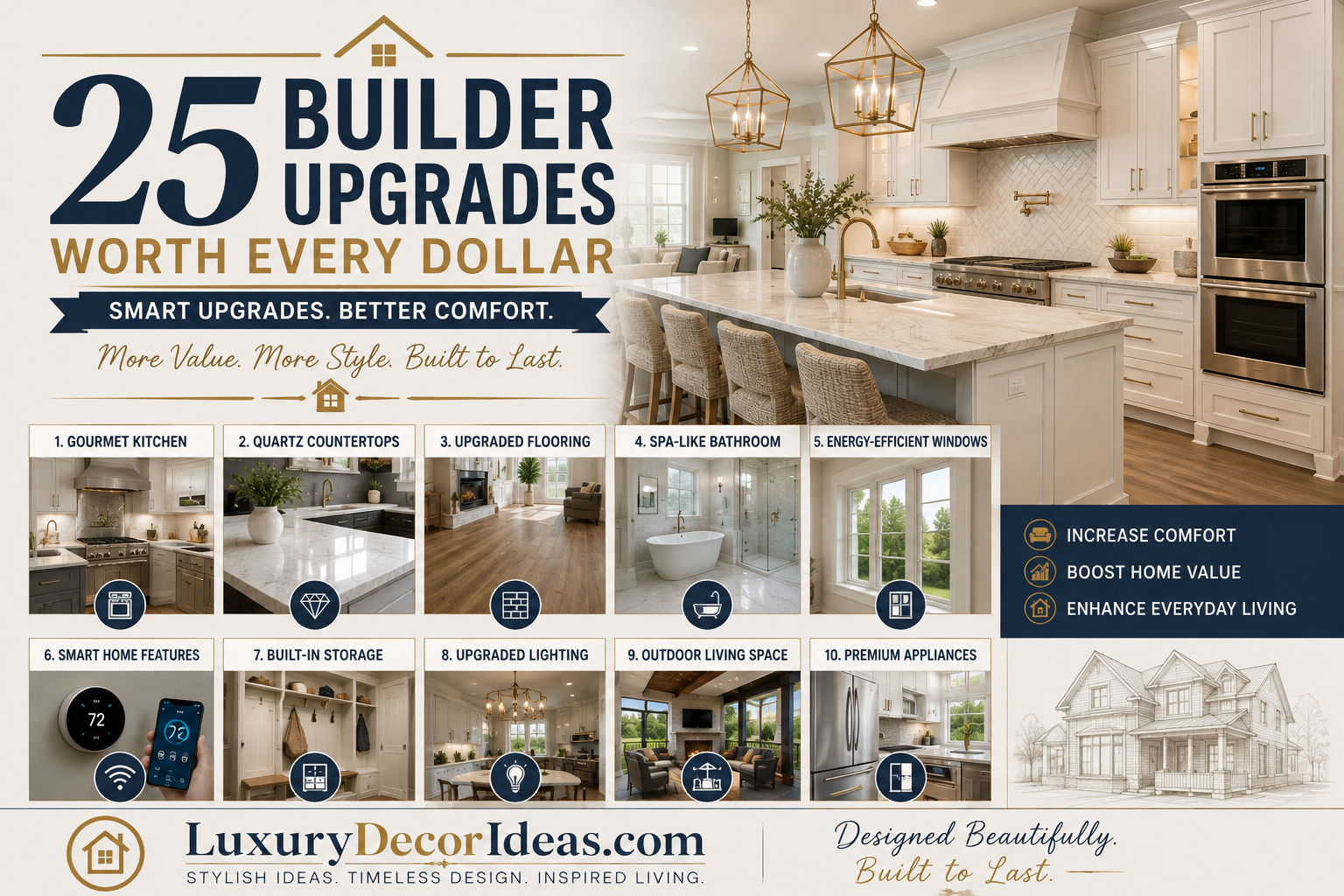
We have pulled together twenty five specific builder upgrades that consistently prove worth the investment, based on both structural necessity and genuine long term satisfaction. This is not a general renovation guide. This is a focused list of the exact upgrades worth prioritizing during your actual builder selections process. Let us walk through them together. 🏡✨
Why These Particular Upgrades Made the List 🤔
Before diving into the specific twenty five, let us talk about the criteria we used to determine genuine worth here.
🌟 The upgrade is difficult or extremely costly to add after construction is complete 🌟 It addresses genuine daily function rather than purely trend driven aesthetics 🌟 It offers strong value relative to typical builder markup compared to similar cosmetic upgrades 🌟 It has proven staying power rather than being tied to a specific short lived trend 🌟 It genuinely improves either comfort, efficiency, or resale value in a measurable way
With that framework established, let us walk through the twenty five upgrades genuinely worth your design center budget.
Structural and Layout Upgrades 🏗️
1. Additional electrical outlets. Nearly impossible to add affordably later, and genuinely missed daily if skipped.
2. Upgraded electrical panel capacity. Future proofs your home for electric vehicle charging, additional appliances, or future renovations.
3. Rough in plumbing for a future bathroom or wet bar. Dramatically cheaper to include now than to retrofit later.
4. Structural support for a future deck or sunroom addition. Planning ahead here saves significant demolition costs down the road.
5. Extra insulation upgrades. Pays for itself over time through reduced energy costs and improved comfort.
Comparison Table: Structural Upgrade Overview 🧾
| Upgrade | Difficulty to Add Later | Long Term Value |
|---|---|---|
| Additional Outlets | Very High | High |
| Electrical Panel Capacity | Very High | Very High |
| Bathroom Rough In | Very High | High |
| Structural Addition Support | High | High |
| Extra Insulation | High | Very High |
Kitchen Upgrades 🍳
6. A properly sized range hood. Prevents daily smoke and odor frustration that is genuinely difficult to fix after the fact.
7. Soft close cabinet hardware. A relatively affordable upgrade that meaningfully improves everyday cabinet function and longevity.
8. Deep drawer storage in place of standard lower cabinets. Significantly improves accessibility for pots, pans, and small appliances.
9. A secondary prep sink in the island. Requires plumbing rough in, making this far more practical to add now than later.
10. Upgraded countertop material. Countertops see constant daily use, making durability genuinely worth the investment.
Comparison Table: Kitchen Upgrade Overview 🧾
| Upgrade | Everyday Impact | Difficulty to Add Later |
|---|---|---|
| Range Hood Sizing | Very High | High |
| Soft Close Hardware | Medium | Medium |
| Deep Drawer Storage | High | High |
| Secondary Prep Sink | High | Very High |
| Upgraded Countertops | High | Medium |
Bathroom Upgrades 🚿
11. A curbless shower design. Offers accessibility and a sleek appearance that is extremely disruptive to add after construction.
12. Heated bathroom flooring. Requires electrical wiring during construction, making this a genuinely difficult retrofit later.
13. A double vanity in the primary bathroom. Improves daily household flow and is difficult to expand later without major plumbing work.
14. Water efficient fixtures. A relatively low cost upgrade that reduces ongoing water usage for years to come.
Comparison Table: Bathroom Upgrade Overview 🧾
| Upgrade | Everyday Impact | Difficulty to Add Later |
|---|---|---|
| Curbless Shower | High | Very High |
| Heated Flooring | High | Very High |
| Double Vanity | High | High |
| Water Efficient Fixtures | Medium | Low |
Whole Home Comfort and Efficiency Upgrades ⚡
15. A higher efficiency HVAC system. Reduces long term energy costs and often includes better humidity control and air quality.
16. Upgraded windows. Improves insulation, noise reduction, and overall home comfort in a way that is genuinely expensive to change later.
17. A tankless or higher capacity water heater. Prevents the common frustration of running out of hot water in a busy household.
18. Smart thermostat pre wiring. A small upfront addition that saves hassle if you want smart home integration down the road.
19. Upgraded attic ventilation. Protects your roof and improves energy efficiency, though it is rarely visible or exciting.
Comparison Table: Comfort and Efficiency Overview 🧾
| Upgrade | Payback Type | Difficulty to Add Later |
|---|---|---|
| Higher Efficiency HVAC | Energy savings | High |
| Upgraded Windows | Energy savings and comfort | Very High |
| Tankless Water Heater | Daily convenience | High |
| Smart Thermostat Wiring | Convenience | Medium |
| Attic Ventilation | Long term protection | High |
Storage and Function Upgrades 📦
20. A larger mudroom or dedicated drop zone. Genuinely improves daily household organization and is difficult to carve out of existing space later.
21. A walk in pantry. Adds substantial kitchen storage capacity that is extremely difficult to add after the floor plan is finalized.
22. Built in closet organization systems. More cost effective to include during construction than retrofitting later.
23. A garage with extra depth or width. Accommodates storage, workshop space, or larger vehicles in a way that cannot be added after the foundation is poured.
Comparison Table: Storage Upgrade Overview 🧾
| Upgrade | Difficulty to Add Later | Daily Value |
|---|---|---|
| Larger Mudroom | Very High | High |
| Walk In Pantry | Very High | Very High |
| Closet Organization | Medium | Medium |
| Extra Garage Depth | Very High | High |
Exterior and Long Term Value Upgrades 🌳
24. Upgraded exterior siding or masonry. Improves long term durability and reduces future maintenance costs.
25. Pre wiring for exterior lighting and a future EV charger. A small addition now that avoids trenching and rewiring costs later.
Full Summary Table of All 25 Upgrades 📋
| Number | Upgrade | Category |
|---|---|---|
| 1 | Additional Electrical Outlets | Structural |
| 2 | Electrical Panel Capacity | Structural |
| 3 | Bathroom Rough In | Structural |
| 4 | Addition Support Structure | Structural |
| 5 | Extra Insulation | Structural |
| 6 | Range Hood Sizing | Kitchen |
| 7 | Soft Close Hardware | Kitchen |
| 8 | Deep Drawer Storage | Kitchen |
| 9 | Secondary Prep Sink | Kitchen |
| 10 | Upgraded Countertops | Kitchen |
| 11 | Curbless Shower | Bathroom |
| 12 | Heated Flooring | Bathroom |
| 13 | Double Vanity | Bathroom |
| 14 | Water Efficient Fixtures | Bathroom |
| 15 | Higher Efficiency HVAC | Comfort |
| 16 | Upgraded Windows | Comfort |
| 17 | Tankless Water Heater | Comfort |
| 18 | Smart Thermostat Wiring | Comfort |
| 19 | Attic Ventilation | Comfort |
| 20 | Larger Mudroom | Storage |
| 21 | Walk In Pantry | Storage |
| 22 | Closet Organization | Storage |
| 23 | Extra Garage Depth | Storage |
| 24 | Upgraded Exterior Materials | Exterior |
| 25 | EV Charger Pre Wiring | Exterior |
How to Prioritize When Your Budget Cannot Cover Everything 🎯
Very few homeowners have the budget to select all twenty five of these upgrades, making prioritization genuinely essential.
🥇 First priority. Anything on this list that is genuinely impossible or extremely disruptive to add after construction, particularly electrical, plumbing rough ins, and structural items.
🥈 Second priority. Upgrades offering measurable long term savings, like efficient HVAC, windows, and insulation.
🥉 Third priority. Daily function upgrades like deep drawers, a double vanity, or closet organization, which improve quality of life but could technically be added later at higher cost.
🏁 Lower priority if budget is tight. Purely cosmetic upgrades that can be sourced independently and more affordably after move in.
Comparison Table: Priority Tier Overview 🧾
| Tier | Focus | Examples |
|---|---|---|
| First Priority | Impossible to retrofit affordably | Outlets, plumbing rough ins, structural support |
| Second Priority | Long term financial payback | HVAC, windows, insulation |
| Third Priority | Daily function improvement | Storage, double vanity, pantry |
| Lower Priority | Cosmetic, sourceable later | Hardware, lighting, paint |
Common Mistakes When Selecting Builder Upgrades ⚠️
Even homeowners with genuinely good intentions can misallocate their design center budget.
❌ Spending heavily on cosmetic finishes while skipping structural or plumbing rough ins that are far more costly to add later ❌ Assuming every upgrade offered at the design center is equally worthwhile, when pricing and value vary significantly ❌ Failing to ask which specific upgrades are difficult or impossible to change after construction begins ❌ Overlooking less exciting but genuinely valuable upgrades like insulation or attic ventilation ❌ Not comparing builder pricing against third party costs for upgrades that could be sourced independently later
Frequently Asked Questions ❓
Which single upgrade on this list offers the strongest overall value? While it depends on your specific home and needs, additional electrical outlets and proper plumbing rough ins consistently rank among the most universally valuable, since they are both essential and extremely difficult to add after the fact.
Should we prioritize kitchen or bathroom upgrades first? Both offer strong value, though we would generally recommend prioritizing whichever upgrades are structurally impossible to add later, regardless of which specific room they belong to.
Is it worth paying builder pricing for cosmetic upgrades like hardware or light fixtures? Often not. These items can frequently be sourced more affordably through independent retailers after move in, making them lower priority for your design center budget.
How do we know which upgrades are genuinely difficult to add later? Ask your builder directly which specific upgrades involve rough in work, structural changes, or systems buried within walls, since these are the upgrades that become significantly more expensive once construction is complete.
Should we skip cosmetic upgrades entirely at the design center? Not necessarily, but understanding that these items can often be sourced more affordably later helps you prioritize your builder budget toward the upgrades that are truly difficult to change after move in.
Final Thoughts 💭
Navigating a builder’s design center does not have to mean guessing which upgrades genuinely deserve your budget. From essential electrical and plumbing rough ins to efficiency focused HVAC and window upgrades, these twenty five specific choices consistently prove worth every dollar spent, precisely because they address genuine structural necessity or long term value that becomes significantly harder to add once your home is complete.
Take this list with you into your own design center appointment, prioritize based on what is truly difficult to change later, and trust that thoughtful, informed selections now will pay off in genuine everyday satisfaction for years to come. Here is to making every design center dollar count. 🏗️🏡