
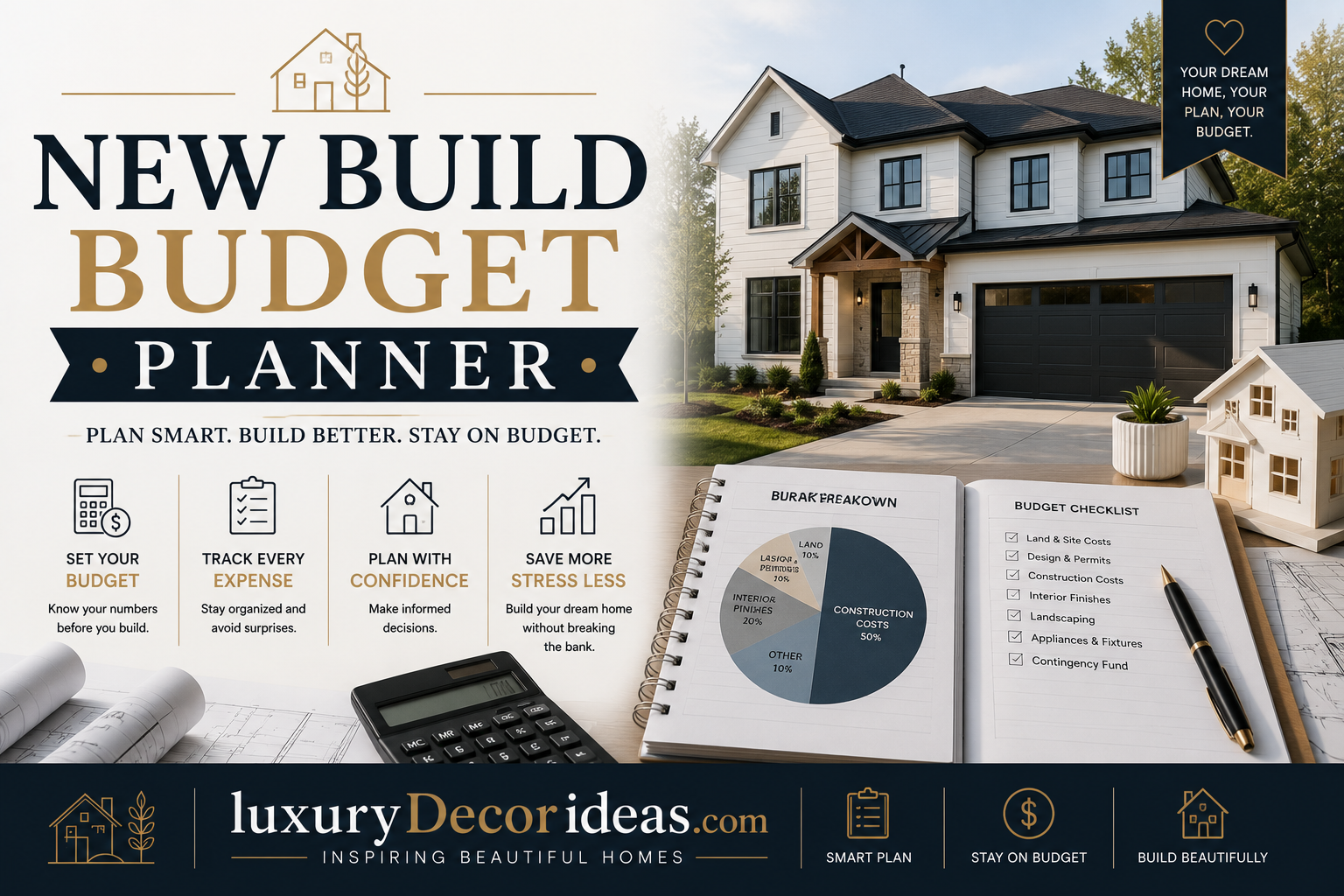
Somewhere between falling in love with a floor plan and actually breaking ground on your future home sits one of the most important, and admittedly least glamorous, parts of the entire process. Building a realistic, comprehensive budget. It is easy to get swept up in exciting design decisions and lose sight of the full financial picture until you are already deep into construction and facing unexpected costs.
We have put together this comprehensive budget planning guide to help you approach your new build with genuine financial clarity from the very beginning. Whether you are just starting to explore the idea of building or you are already deep into the planning process, this guide will help you organize, categorize, and realistically estimate every major expense category ahead. Let us get your numbers in order. 📊✨
Why a Comprehensive Budget Plan Matters So Much 🤔
Before diving into specific categories, let us talk about why building a truly comprehensive budget from the start genuinely protects you throughout this process.
🌟 A detailed budget helps you make informed tradeoffs between different priorities rather than reacting emotionally in the moment 🌟 Understanding your full financial picture upfront prevents the common experience of running out of budget before reaching important finishing touches 🌟 A realistic plan helps you communicate more effectively with your builder and lender about what is genuinely achievable 🌟 Building in appropriate contingency funds protects you from the inevitable unexpected costs that arise during construction 🌟 A clear budget framework reduces stress and decision fatigue throughout the many months of your build
With that foundation established, let us walk through exactly how to build your own comprehensive new build budget.
Category One: Land and Site Costs 📍
Before any construction begins, your land purchase and site preparation represent one of the earliest and most significant budget categories.
🏞️ Purchase price of the lot itself 🌳 Site clearing, grading, and general land preparation 🪨 Soil testing and any related foundation engineering adjustments 🔌 Utility connection fees for water, sewer, electrical, and gas 📋 Permit and impact fees specific to your local municipality
Comparison Table: Land and Site Budget Breakdown 🧾
| Line Item | Typical Budget Consideration |
|---|---|
| Lot Purchase Price | Varies significantly by location |
| Site Clearing and Grading | Depends on existing lot conditions |
| Soil Testing | Relatively small but important investment |
| Utility Connections | Varies by proximity to existing infrastructure |
| Permits and Impact Fees | Varies significantly by municipality |
Category Two: Core Construction Costs 🏗️
This represents the primary category most homeowners think of first, covering the actual building of your home’s structure.
🧱 Foundation work 🪜 Framing materials and labor 🏠 Roofing installation 🪟 Windows and exterior doors 🧴 Exterior siding, brick, or stucco
Category Three: Mechanical Systems 🔧
Your home’s essential mechanical systems represent a significant portion of your overall construction budget.
🌬️ HVAC system installation 🚰 Plumbing installation and fixtures ⚡ Electrical wiring and panel installation 💧 Water heater 🧯 Safety systems including smoke and carbon monoxide detectors
Comparison Table: Core Construction Versus Mechanical Systems 🧾
| Category | Includes | Budget Priority Level |
|---|---|---|
| Core Construction | Foundation, framing, roofing, windows | Very High |
| Mechanical Systems | HVAC, plumbing, electrical | Very High |
| Insulation and Drywall | Wall and ceiling finishing | High |
| Interior Finishes | Flooring, paint, trim | High |
| Cosmetic Upgrades | Fixtures, hardware, decor | Medium to Low |
Category Four: Interior Finishes 🎨
Once your home’s structure and mechanical systems are complete, interior finishing work represents another substantial budget category.
🪵 Flooring throughout the home 🚪 Interior doors and trim 🖌️ Paint and wall finishes 🗄️ Cabinetry throughout the kitchen and bathrooms 🪨 Countertops and backsplash materials
Category Five: Appliances and Fixtures 🍳
This category covers the functional items that will make your home genuinely livable from day one.
🍳 Kitchen appliances, including range, refrigerator, dishwasher, and microwave 🚿 Plumbing fixtures, including faucets, sinks, and toilets 💡 Light fixtures throughout the home 🚪 Cabinet hardware and door hardware
Comparison Table: Appliance and Fixture Budget Planning 🧾
| Item Category | Budget Range Consideration | Priority Level |
|---|---|---|
| Major Kitchen Appliances | Significant investment, varies by brand tier | High |
| Plumbing Fixtures | Moderate investment across multiple bathrooms | High |
| Light Fixtures | Wide range depending on style choices | Medium |
| Cabinet and Door Hardware | Relatively small but adds up across many pieces | Medium |
Category Six: Landscaping and Exterior Finishing 🌳
Many first time home builders are surprised to learn that landscaping and certain exterior details are frequently not included within the base construction contract.
🌱 Basic landscaping, including grass, plants, and general yard grading 🛣️ Driveway and walkway installation 🪟 Exterior lighting fixtures 📬 Mailbox and house numbers 🚗 Fencing, if applicable to your property
Category Seven: Financing and Closing Costs 🏦
Beyond the physical construction itself, financing your build involves its own set of associated costs worth budgeting for separately.
💳 Construction loan fees and associated interest costs during the build 📋 Inspection fees tied to each construction draw request 🏦 Traditional mortgage closing costs once construction is complete 📄 Any required title insurance or related legal fees
Comparison Table: Financing Cost Considerations 🧾
| Cost Type | When It Applies | Budget Consideration |
|---|---|---|
| Construction Loan Fees | Throughout the build | Varies by lender |
| Draw Inspection Fees | At each construction milestone | Relatively small, per draw |
| Closing Costs | At final mortgage conversion | Similar to traditional home purchase |
| Title Insurance | At closing | Standard percentage of loan amount |
Category Eight: Moving and Post Construction Costs 📦
Once your home is complete, a few final categories deserve dedicated budget consideration as you transition into your new space.
🚛 Professional moving services or truck rental 🛋️ Furniture for any new or larger spaces compared to your previous home 🪟 Window treatments throughout the home 🔒 Security system installation 🗄️ Closet organization systems
Category Nine: Contingency Fund 🎯
Perhaps the single most important line item on your entire budget planner is a dedicated contingency fund for the unexpected costs that inevitably arise during any construction project.
💰 Many financial experts and experienced builders recommend setting aside an additional ten to twenty percent of your total estimated budget specifically for unforeseen expenses 🔍 This fund helps absorb surprises like unexpected soil conditions, material price fluctuations, or mid build design changes 🛡️ Having this cushion genuinely reduces financial stress throughout the construction process
Full Summary Table of Budget Categories 📋
| Number | Category | Priority Level |
|---|---|---|
| 1 | Land and Site Costs | Very High |
| 2 | Core Construction | Very High |
| 3 | Mechanical Systems | Very High |
| 4 | Interior Finishes | High |
| 5 | Appliances and Fixtures | High |
| 6 | Landscaping and Exterior | Medium |
| 7 | Financing and Closing Costs | High |
| 8 | Moving and Post Construction | Medium |
| 9 | Contingency Fund | Very High |
How to Structure Your Own Budget Planning Document 📝
With these categories established, here is a practical framework for organizing your own comprehensive budget planner.
📊 Create a spreadsheet with each major category listed as its own section 💵 Within each category, list specific line items along with your estimated cost for each ✅ Add a column to track actual costs as they are confirmed throughout the process, allowing you to compare against your original estimates 🔄 Update your planner regularly throughout construction, rather than only reviewing it at the very beginning 📈 Track your contingency fund usage separately, so you always know how much cushion remains available
Tips for Keeping Your Budget on Track 🎯
Beyond simply creating your initial budget plan, a few ongoing habits help ensure you actually stay within your intended financial framework throughout construction.
📋 Review your budget regularly with your builder, rather than only discussing costs at major milestones 💬 Communicate proactively about any potential changes before they become formal, costly change orders 🔍 Compare quotes for any category where you have flexibility, such as landscaping or appliances 🛑 Set a personal rule for how you will handle upgrade temptations that exceed your original budget allocation 📊 Revisit your contingency fund periodically to ensure it remains adequate for the remainder of your project
Common Budgeting Mistakes to Avoid ⚠️
Even homeowners who create a thorough initial budget can run into a few common pitfalls throughout the process.
❌ Failing to include a realistic contingency fund from the very beginning ❌ Underestimating landscaping and exterior finishing costs, assuming these are included in the base contract ❌ Not accounting for financing related costs beyond the construction contract itself ❌ Overspending early in the process on structural upgrades, leaving inadequate budget for finishing touches ❌ Failing to track actual costs against original estimates throughout construction, losing sight of the overall financial picture
Frequently Asked Questions ❓
How much should our total contingency fund actually be? Many financial experts and experienced builders recommend setting aside an additional ten to twenty percent beyond your total estimated budget specifically for unexpected costs.
What is the most commonly underestimated budget category? Landscaping and exterior finishing work is frequently underestimated, since many homeowners assume this is included in their base construction contract when it often is not.
Should we include moving and furniture costs in our overall build budget? Yes, we would recommend accounting for these post construction expenses within your comprehensive budget planning, since they represent genuine costs associated with your overall transition into the new home.
How often should we update our budget planner throughout construction? We recommend reviewing and updating your budget regularly, ideally at each major construction milestone, rather than only referring back to your original estimates from the very beginning of the process.
Is it normal for actual costs to exceed our original budget estimates? Yes, this is extremely common throughout custom home construction, which is precisely why building in a realistic contingency fund from the start is so genuinely important.
Final Thoughts 💭
Building a comprehensive, realistic budget for your new home construction genuinely sets the foundation for a smoother, less stressful overall experience. From land and site costs through core construction, interior finishes, and that all important contingency fund, thinking through each of these categories thoroughly before breaking ground helps you make informed decisions throughout the entire process.
Take the time to build out your own detailed budget planner, revisit it regularly throughout construction, and give yourself grace when unexpected costs inevitably arise. Here is to building your dream home with genuine financial clarity and confidence every step of the way. 💰🏡