
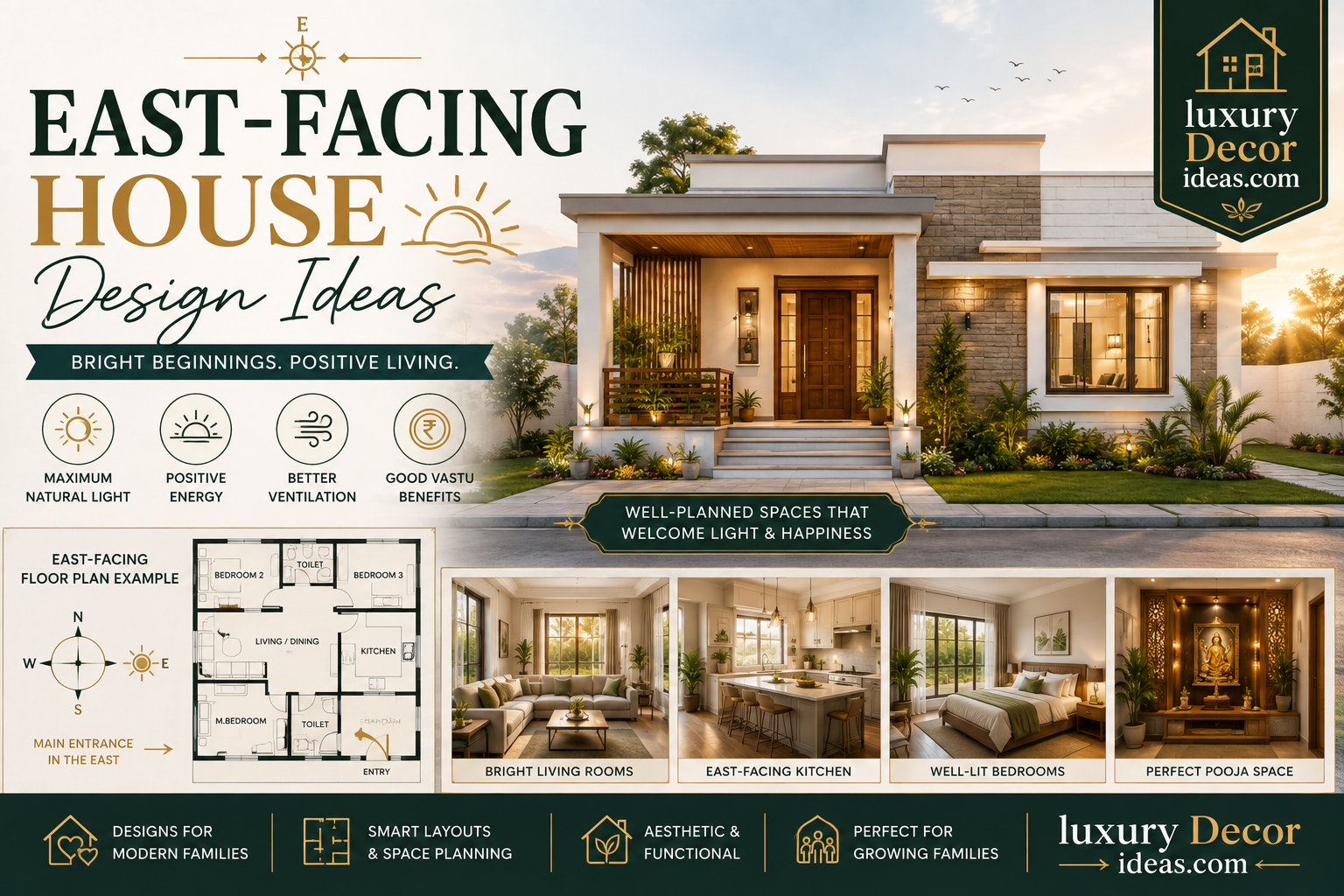
There is something genuinely wonderful about waking up to morning sunlight streaming through your windows, and if you are building or buying a home that faces east, that daily experience is essentially built into your orientation. East facing homes come with their own distinct set of advantages and design considerations, from how natural light moves through your rooms to how you should think about window placement, landscaping, and even energy efficiency.
We have pulled together a comprehensive guide to east facing house design, covering exactly how to make the most of this particular orientation throughout every stage of your planning process. Let us explore how to design a home that genuinely works with the sun rather than against it. Let us dive in. ☀️✨
Understanding What East Facing Actually Means 🤔
Before diving into specific design ideas, let us clarify exactly what this orientation involves and why it genuinely matters for your planning process.
🧭 An east facing home typically refers to the front of the house, including the main entry, facing toward the eastern horizon 🌅 This orientation means your front facade and front facing rooms receive direct morning sunlight 🌇 Consequently, the back of the home generally faces west, receiving stronger afternoon and evening sun exposure 🏠 Understanding this relationship between front and back sun exposure genuinely shapes how you should approach room placement and window design
With this foundation established, let us explore the specific design considerations worth prioritizing for an east facing home.
The Genuine Advantages of an East Facing Home 🌟
Before diving into design strategy, let us acknowledge why this particular orientation appeals to so many homeowners.
☀️ Gentle, warm morning light fills front facing rooms, creating a naturally uplifting start to the day 🌡️ Front rooms avoid the intense, harsh afternoon heat that west facing spaces often experience 🌳 The rear of the home, facing west, tends to receive stronger afternoon sun, which can be a genuine benefit for outdoor entertaining spaces used primarily in the evening 🛌 Bedrooms placed toward the front of the home benefit from gentle morning light rather than harsh late day heat
Comparison Table: East Facing Advantages Overview 🧾
| Advantage | Impact |
|---|---|
| Gentle Morning Light | Uplifting start to the day |
| Reduced Afternoon Heat in Front Rooms | Improved comfort and efficiency |
| Strong Evening Light in Rear | Ideal for outdoor entertaining spaces |
| Balanced Overall Light Exposure | Comfortable year round living |
Room Placement Strategy for East Facing Homes 📐
Thoughtfully positioning specific rooms based on this orientation genuinely improves your home’s everyday comfort and energy efficiency.
☕ Kitchen and breakfast nook. Positioning these spaces toward the front, east facing side allows you to enjoy gentle morning light during breakfast and coffee routines.
🛏️ Primary bedroom. Many homeowners appreciate a front facing bedroom for this same gentle morning light benefit, waking naturally with the sunrise.
🛋️ Living and entertaining spaces. Positioning these toward the rear, west facing side allows them to benefit from warmer, more dramatic afternoon and evening light, ideal for entertaining.
🏢 Home office. Consider a front facing location if you want energizing morning light during work hours, or a rear location if you prefer softer, less direct lighting for screen based work.
Comparison Table: Recommended Room Placement 🧾
| Room | Recommended Placement | Reasoning |
|---|---|---|
| Kitchen and Breakfast Nook | Front, east facing | Gentle morning light for daily routines |
| Primary Bedroom | Front, east facing | Natural wake up light |
| Living and Entertaining Areas | Rear, west facing | Warm afternoon and evening light |
| Home Office | Either, based on preference | Depends on desired lighting intensity |
Window Placement and Sizing Strategies 🪟
Windows genuinely determine how effectively your home captures and manages natural light throughout the day.
🌅 Larger windows on the east facing front. Maximizes that gentle morning light benefit throughout front facing rooms.
🌇 Moderate to controlled window sizing on the west facing rear. Since afternoon sun can be more intense, balancing window size with adequate shading helps prevent excessive heat gain.
🏠 North and south facing side windows. These typically offer more consistent, diffused light throughout the day, making them valuable for spaces like home offices or reading nooks.
Comparison Table: Window Strategy by Orientation 🧾
| Facing Direction | Light Quality | Recommended Approach |
|---|---|---|
| East, Front Facade | Gentle morning light | Larger windows welcomed |
| West, Rear Facade | Intense afternoon light | Moderate sizing with shading |
| North Facing Sides | Consistent, diffused light | Good for offices or reading spaces |
| South Facing Sides | Strong, consistent light | Consider overhangs for heat control |
Managing Afternoon Heat on the West Side ☀️
Since the rear of an east facing home typically faces west, thoughtful heat management strategies genuinely improve comfort and efficiency.
🌳 Strategic tree placement. Deciduous trees positioned on the western side provide cooling shade during hot summer afternoons while allowing sunlight through during winter months once leaves drop.
🏠 Covered patios or pergolas. These structures genuinely reduce direct heat gain in outdoor living spaces while still allowing you to enjoy the evening light.
🪟 Energy efficient, low emissivity windows. These help control heat transfer on west facing windows without sacrificing the view or natural light benefit.
🎨 Exterior shading elements. Awnings, shutters, or architectural overhangs on west facing windows help manage intense afternoon sun exposure.
Comparison Table: West Side Heat Management Strategies 🧾
| Strategy | Primary Benefit | Best For |
|---|---|---|
| Deciduous Tree Placement | Seasonal shade balance | Long term landscaping investment |
| Covered Patios | Outdoor comfort | Entertaining spaces |
| Low Emissivity Windows | Reduced heat transfer | Window specific solution |
| Exterior Shading Elements | Direct sun blocking | Targeted window protection |
Landscaping Considerations for East Facing Homes 🌳
Your landscaping plan genuinely benefits from working in harmony with your home’s specific sun exposure pattern.
🌸 Front yard plantings. Choose plants that thrive in the gentler morning light and partial afternoon shade typical of an east facing front yard.
🌻 Rear yard plantings. Since the back of the home receives stronger afternoon sun, prioritize plants that genuinely tolerate heat and direct light exposure.
🌳 Shade tree placement. Positioning larger trees strategically on the western side helps naturally cool your outdoor living spaces during peak afternoon heat.
Comparison Table: Landscaping Strategy by Yard Position 🧾
| Yard Area | Sun Exposure | Recommended Plant Types |
|---|---|---|
| Front Yard, East Facing | Gentle morning sun | Partial shade tolerant plants |
| Rear Yard, West Facing | Strong afternoon sun | Heat and sun tolerant plants |
| Side Yards | Variable, depends on specific orientation | Assess individually |
Interior Design Considerations 🎨
Your interior color and material choices can genuinely work with your home’s natural light pattern for the most flattering, comfortable overall result.
🎨 Front facing rooms. Since these spaces receive softer morning light, warmer color palettes can feel especially cozy and inviting during those early hours.
🖼️ Rear facing rooms. Given the stronger afternoon light these spaces receive, cooler tones or those with more visual weight can help balance the more intense natural lighting.
🪟 Window treatments. Sheer curtains work beautifully for front facing rooms to soften morning light, while rear facing rooms may benefit from slightly heavier or light filtering options to manage afternoon intensity.
Comparison Table: Interior Design Recommendations by Room Position 🧾
| Room Position | Light Character | Suggested Approach |
|---|---|---|
| Front, East Facing | Soft, gentle | Warm colors, sheer curtains |
| Rear, West Facing | Strong, intense | Balanced tones, light filtering treatments |
Energy Efficiency Considerations 🌡️
A few specific efficiency strategies genuinely help east facing homes perform their best throughout the year.
⚡ Prioritize proper insulation and energy efficient windows on the west facing rear, where afternoon heat gain is most significant 🌬️ Consider your HVAC zoning carefully, since front and rear rooms may experience noticeably different temperature patterns throughout the day ☀️ Take advantage of passive solar heating benefits during colder months, when morning sun through east facing windows can genuinely help warm your home naturally
Full Summary Table of Key Design Strategies 📋
| Category | Key Strategy |
|---|---|
| Room Placement | Kitchen and bedrooms toward the front |
| Window Sizing | Larger on east, moderated on west |
| Heat Management | Trees and shading on the west side |
| Landscaping | Match plants to specific light exposure |
| Interior Colors | Warm tones front, balanced tones rear |
| Energy Efficiency | Extra insulation focus on west facing rear |
Common Mistakes to Avoid With East Facing Homes ⚠️
Even homeowners genuinely excited about this orientation can run into a few common planning oversights.
❌ Installing oversized, unshaded windows on the west facing rear without considering afternoon heat gain ❌ Failing to plan landscaping around each yard’s specific actual sun exposure pattern ❌ Overlooking HVAC zoning needs, resulting in inconsistent temperatures between front and rear rooms ❌ Choosing interior colors without considering how the specific quality of light in each room will affect their appearance throughout the day
Frequently Asked Questions ❓
Is an east facing home considered a good orientation for building? Yes, many homeowners genuinely appreciate this orientation for its gentle morning light benefit and its ability to help protect front facing rooms from harsh afternoon heat.
Do we need special windows for an east facing home? While not strictly required, energy efficient, low emissivity windows are particularly beneficial for the west facing rear of an east facing home, helping manage more intense afternoon heat gain.
What is the best room to place at the front of an east facing home? Many homeowners find kitchens, breakfast nooks, and primary bedrooms benefit significantly from the gentle, energizing morning light typical of a front facing, east oriented room.
How does an east facing orientation affect landscaping decisions? Since front and rear yards will experience noticeably different sun exposure, choosing plants suited to each specific area’s actual light conditions genuinely improves landscaping success.
Does an east facing home cost more to heat and cool than other orientations? Not necessarily, though thoughtful design, particularly regarding west facing window sizing and shading, genuinely helps optimize energy efficiency throughout the year.
Final Thoughts 💭
Designing a home around an east facing orientation offers genuine opportunities to create a space that works harmoniously with natural light rather than fighting against it. From thoughtful room placement and window sizing to strategic landscaping and interior color choices, these design considerations help you make the absolute most of your home’s specific sun exposure pattern.
Take the time to think through how morning and afternoon light will move through your specific floor plan, work with your builder or architect to optimize window placement and shading, and trust that these thoughtful design choices will result in a home that feels genuinely bright, comfortable, and energy efficient throughout every season. Here is to a home that welcomes each sunrise beautifully. 🌅🏡